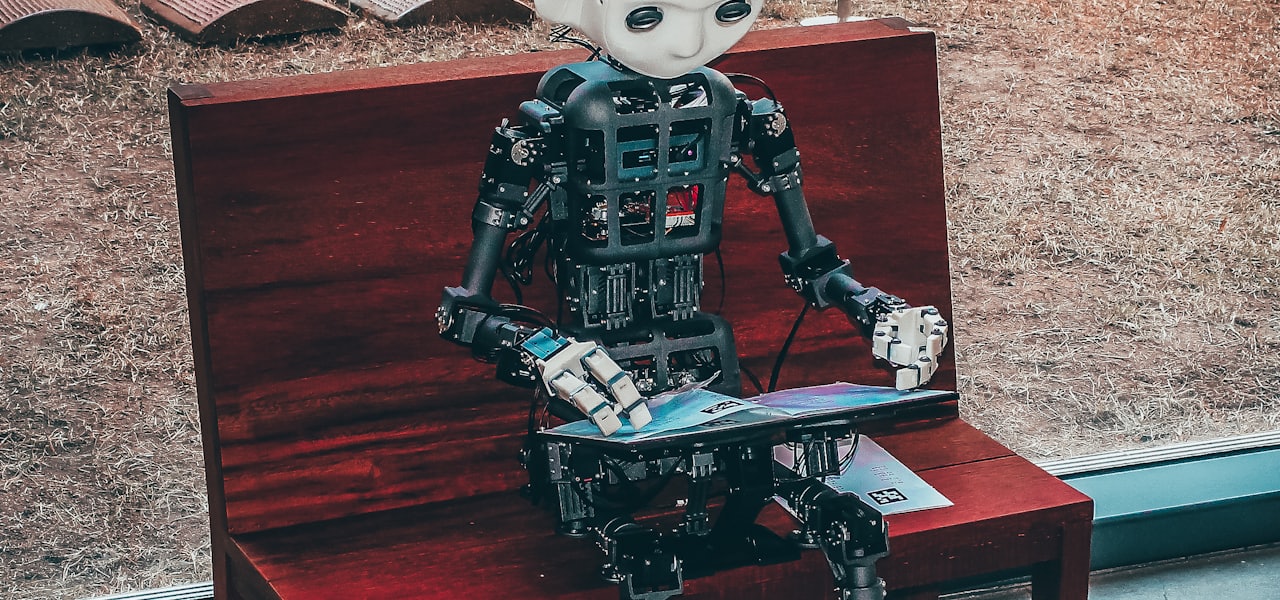
When creating computer-generated imagery, final scenes appearing in movies and television productions are usually produced by rendering more than one "layer" or "pass," which are multiple images designed to be put together through digital compositing to form a completed frame. Rendering in passes is based on a traditions in motion control photography which predate CGI. As an example, for a visual effects shot, a camera could be programmed to move past a physical model of a spaceship in one pass to film the fully lit beauty pass of the ship, and then to repeat exactly the same camera move passing the ship again to photograph additional elements such as the illuminated windows in the ship or its thrusters. Once all of the passes were filmed, they could then be optically printed together to form a completed shot. The terms render layers and render passes are sometimes used interchangeably. However, rendering in layers refers specifically to separating different objects into separate images, such as a layer each for foreground characters, sets, distant landscape, and sky. On the other hand, rendering in passes refers to separating out different aspects of the scene, such as shadows, highlights, or reflections, into separate images.
Matrix regularization
In the field of statistical learning theory, matrix regularization generalizes notions of vector regularization to cases where the object to be learned is a matrix. The purpose of regularization is to enforce conditions, for example sparsity or smoothness, that can produce stable predictive functions. For example, in the more common vector framework, Tikhonov regularization optimizes over min x ‖ A x − y ‖ 2 + λ ‖ x ‖ 2 {\displaystyle \min _{x}\left\|Ax-y\right\|^{2}+\lambda \left\|x\right\|^{2}} to find a vector x {\displaystyle x} that is a stable solution to the regression problem. When the system is described by a matrix rather than a vector, this problem can be written as min X ‖ A X − Y ‖ 2 + λ ‖ X ‖ 2 , {\displaystyle \min _{X}\left\|AX-Y\right\|^{2}+\lambda \left\|X\right\|^{2},} where the vector norm enforcing a regularization penalty on x {\displaystyle x} has been extended to a matrix norm on X {\displaystyle X} . Matrix regularization has applications in matrix completion, multivariate regression, and multi-task learning. Ideas of feature and group selection can also be extended to matrices, and these can be generalized to the nonparametric case of multiple kernel learning. == Basic definition == Consider a matrix W {\displaystyle W} to be learned from a set of examples, S = ( X i t , y i t ) {\displaystyle S=(X_{i}^{t},y_{i}^{t})} , where i {\displaystyle i} goes from 1 {\displaystyle 1} to n {\displaystyle n} , and t {\displaystyle t} goes from 1 {\displaystyle 1} to T {\displaystyle T} . Let each input matrix X i {\displaystyle X_{i}} be ∈ R D T {\displaystyle \in \mathbb {R} ^{DT}} , and let W {\displaystyle W} be of size D × T {\displaystyle D\times T} . A general model for the output y {\displaystyle y} can be posed as y i t = ⟨ W , X i t ⟩ F , {\displaystyle y_{i}^{t}=\left\langle W,X_{i}^{t}\right\rangle _{F},} where the inner product is the Frobenius inner product. For different applications the matrices X i {\displaystyle X_{i}} will have different forms, but for each of these the optimization problem to infer W {\displaystyle W} can be written as min W ∈ H E ( W ) + R ( W ) , {\displaystyle \min _{W\in {\mathcal {H}}}E(W)+R(W),} where E {\displaystyle E} defines the empirical error for a given W {\displaystyle W} , and R ( W ) {\displaystyle R(W)} is a matrix regularization penalty. The function R ( W ) {\displaystyle R(W)} is typically chosen to be convex and is often selected to enforce sparsity (using ℓ 1 {\displaystyle \ell ^{1}} -norms) and/or smoothness (using ℓ 2 {\displaystyle \ell ^{2}} -norms). Finally, W {\displaystyle W} is in the space of matrices H {\displaystyle {\mathcal {H}}} with Frobenius inner product ⟨ … ⟩ F {\displaystyle \langle \dots \rangle _{F}} . == General applications == === Matrix completion === In the problem of matrix completion, the matrix X i t {\displaystyle X_{i}^{t}} takes the form X i t = e t ⊗ e i ′ , {\displaystyle X_{i}^{t}=e_{t}\otimes e_{i}',} where ( e t ) t {\displaystyle (e_{t})_{t}} and ( e i ′ ) i {\displaystyle (e_{i}')_{i}} are the canonical basis in R T {\displaystyle \mathbb {R} ^{T}} and R D {\displaystyle \mathbb {R} ^{D}} . In this case the role of the Frobenius inner product is to select individual elements w i t {\displaystyle w_{i}^{t}} from the matrix W {\displaystyle W} . Thus, the output y {\displaystyle y} is a sampling of entries from the matrix W {\displaystyle W} . The problem of reconstructing W {\displaystyle W} from a small set of sampled entries is possible only under certain restrictions on the matrix, and these restrictions can be enforced by a regularization function. For example, it might be assumed that W {\displaystyle W} is low-rank, in which case the regularization penalty can take the form of a nuclear norm. R ( W ) = λ ‖ W ‖ ∗ = λ ∑ i | σ i | , {\displaystyle R(W)=\lambda \left\|W\right\|_{}=\lambda \sum _{i}\left|\sigma _{i}\right|,} where σ i {\displaystyle \sigma _{i}} , with i {\displaystyle i} from 1 {\displaystyle 1} to min D , T {\displaystyle \min D,T} , are the singular values of W {\displaystyle W} . === Multivariate regression === Models used in multivariate regression are parameterized by a matrix of coefficients. In the Frobenius inner product above, each matrix X {\displaystyle X} is X i t = e t ⊗ x i {\displaystyle X_{i}^{t}=e_{t}\otimes x_{i}} such that the output of the inner product is the dot product of one row of the input with one column of the coefficient matrix. The familiar form of such models is Y = X W + b {\displaystyle Y=XW+b} Many of the vector norms used in single variable regression can be extended to the multivariate case. One example is the squared Frobenius norm, which can be viewed as an ℓ 2 {\displaystyle \ell ^{2}} -norm acting either entrywise, or on the singular values of the matrix: R ( W ) = λ ‖ W ‖ F 2 = λ ∑ i ∑ j | w i j | 2 = λ Tr ( W ∗ W ) = λ ∑ i σ i 2 . {\displaystyle R(W)=\lambda \left\|W\right\|_{F}^{2}=\lambda \sum _{i}\sum _{j}\left|w_{ij}\right|^{2}=\lambda \operatorname {Tr} \left(W^{}W\right)=\lambda \sum _{i}\sigma _{i}^{2}.} In the multivariate case the effect of regularizing with the Frobenius norm is the same as the vector case; very complex models will have larger norms, and, thus, will be penalized more. === Multi-task learning === The setup for multi-task learning is almost the same as the setup for multivariate regression. The primary difference is that the input variables are also indexed by task (columns of Y {\displaystyle Y} ). The representation with the Frobenius inner product is then X i t = e t ⊗ x i t . {\displaystyle X_{i}^{t}=e_{t}\otimes x_{i}^{t}.} The role of matrix regularization in this setting can be the same as in multivariate regression, but matrix norms can also be used to couple learning problems across tasks. In particular, note that for the optimization problem min W ‖ X W − Y ‖ 2 2 + λ ‖ W ‖ 2 2 {\displaystyle \min _{W}\left\|XW-Y\right\|_{2}^{2}+\lambda \left\|W\right\|_{2}^{2}} the solutions corresponding to each column of Y {\displaystyle Y} are decoupled. That is, the same solution can be found by solving the joint problem, or by solving an isolated regression problem for each column. The problems can be coupled by adding an additional regularization penalty on the covariance of solutions min W , Ω ‖ X W − Y ‖ 2 2 + λ 1 ‖ W ‖ 2 2 + λ 2 Tr ( W T Ω − 1 W ) {\displaystyle \min _{W,\Omega }\left\|XW-Y\right\|_{2}^{2}+\lambda _{1}\left\|W\right\|_{2}^{2}+\lambda _{2}\operatorname {Tr} \left(W^{T}\Omega ^{-1}W\right)} where Ω {\displaystyle \Omega } models the relationship between tasks. This scheme can be used to both enforce similarity of solutions across tasks, and to learn the specific structure of task similarity by alternating between optimizations of W {\displaystyle W} and Ω {\displaystyle \Omega } . When the relationship between tasks is known to lie on a graph, the Laplacian matrix of the graph can be used to couple the learning problems. == Spectral regularization == Regularization by spectral filtering has been used to find stable solutions to problems such as those discussed above by addressing ill-posed matrix inversions (see for example Filter function for Tikhonov regularization). In many cases the regularization function acts on the input (or kernel) to ensure a bounded inverse by eliminating small singular values, but it can also be useful to have spectral norms that act on the matrix that is to be learned. There are a number of matrix norms that act on the singular values of the matrix. Frequently used examples include the Schatten p-norms, with p = 1 or 2. For example, matrix regularization with a Schatten 1-norm, also called the nuclear norm, can be used to enforce sparsity in the spectrum of a matrix. This has been used in the context of matrix completion when the matrix in question is believed to have a restricted rank. In this case the optimization problem becomes: min ‖ W ‖ ∗ subject to W i , j = Y i j . {\displaystyle \min \left\|W\right\|_{}~~{\text{ subject to }}~~W_{i,j}=Y_{ij}.} Spectral Regularization is also used to enforce a reduced rank coefficient matrix in multivariate regression. In this setting, a reduced rank coefficient matrix can be found by keeping just the top n {\displaystyle n} singular values, but this can be extended to keep any reduced set of singular values and vectors. == Structured sparsity == Sparse optimization has become the focus of much research interest as a way to find solutions that depend on a small number of variables (see e.g. the Lasso method). In principle, entry-wise sparsity can be enforced by penalizing the entry-wise ℓ 0 {\displaystyle \ell ^{0}} -norm of the matrix, but the ℓ 0 {\displaystyle \ell ^{0}} -norm is not convex. In practice this can be implemented by convex relaxation to the ℓ 1 {\displaystyle \ell ^{1}} -norm. While entry-wise regularization with an ℓ 1 {\displaystyle \ell ^{1}} -norm will find solutions with a small number of nonzero elements, applying an ℓ 1 {
T-vertices
T-vertices is a term used in computer graphics to describe a problem that can occur during mesh refinement or mesh simplification. The most common case occurs in naive implementations of continuous level of detail, where a finer-level mesh is "sewn" together with a coarser-level mesh by simply aligning the finer vertices on the edges of the coarse polygons. The result is a continuous mesh, however due to the nature of the z-buffer and certain lighting algorithms such as Gouraud shading, visual artifacts can often be detected. Some modeling algorithms such as subdivision surfaces will fail when a model contains T-vertices.
Key–value database
A key-value database, or key-value store, is a data storage paradigm designed for storing, retrieving, and managing associative arrays, a data structure more commonly known today as a dictionary. Dictionaries contain a collection of objects, or records, which in turn have many different fields within them. These records are stored and retrieved using a key that uniquely identifies the record, and is used to find the data within the database. Key-value databases differ from the better known relational databases (RDB). RDBs pre-define the data structure in the database as a series of tables containing fields with well-defined data types. Exposing the data types to the database program allows it to apply various optimizations. In contrast, key-value systems treat the value as opaque to the database itself, and typically support only simple operations such as storing, retrieving, updating, and deleting a value by its key. This offers considerable flexibility and makes such systems well suited to low-latency, high-throughput workloads dominated by direct key lookups, but less suitable for applications that require complex queries or explicit relationships among records. A lack of standardization, limited transaction support, and relatively simple query interfaces long restricted many key-value systems to specialized uses, but the rapid move to cloud computing after 2010 helped drive renewed interest in them as part of the broader NoSQL movement. Some graph databases, such as ArangoDB, are also key–value databases internally, adding the concept of relationships (pointers) between records as a first-class data type. == Types and examples == Key–value systems span a wide consistency spectrum, from eventually consistent designs to strongly consistent or serializable ones, and some allow the consistency level to be configured as part of the trade-off against latency and availability. Renewed interest in key–value and other NoSQL systems was driven in part by the demands of big data, distributed, and cloud applications. Their scalability and availability made them attractive for cloud data management, although limited transaction support, low-level query interfaces, and the lack of standardization remained obstacles to wider adoption. Some maintain data in memory (RAM), while others employ solid-state drives or rotating disks. Some key–value systems add additional structure to their keys. For example, Oracle NoSQL Database organizes records using composite keys with "major" and "minor" components, an arrangement that Oracle compares to a directory-path structure in a file system. More generally, however, key–value stores are defined by their use of unique keys associated with opaque values and by their emphasis on simple key-based operations. Unix included dbm (database manager), a minimal database library written by Ken Thompson for managing associative arrays with a single key and hash-based access. Later implementations and related libraries included sdbm, GNU dbm (gdbm), and Berkeley DB. A more recent example is RocksDB, a persistent key–value storage engine developed at Facebook and designed for large-scale applications. Other examples include in-memory systems such as Memcached and Redis, and persistent systems such as Berkeley DB, Riak, and Voldemort.
Taimi
Taimi ( TAY-mee) is a dating app that caters to the LGBTQI+ community. The network matches its registered users based on their selected preferences and location. Originally an online dating service for gay men, by 2022 Taimi had become an app for all members of the LGBTQI+ community. It operates in more than 138 countries, including the US, UK, the Netherlands, Spain, Central and South America, Ukraine, and other European and Asian countries. Taimi runs on iOS and Android. The mobile app has a free and subscription-based premium version and offers a number of services for communication, including live streaming, chatting, and video calling. There is also an active blog that regularly posts articles and news about events of interest to the LGBTQ+ community. The application does not provide for non-Google e-mail log option, either phone number or Facebook account, during the registration process. The data controller for the non EU/UK users is based in a company, called Social Impact Inc., with its registered address at 1180 North Town Center Drive Suite 100, Las Vegas, Nevada, 89144, United States of America. == History == Taimi was launched in 2017 by Social Impact, Inc. in Las Vegas. Its founder, Alex Pasykov, originally called the app "Tame Me," a name that gradually morphed into Taimi. Over time, Taimi expanded into other countries, and expanding its reach to the LGBTQ+ community, so that, by 2022, it was fully inclusive of the entire queer community. In November 2020 the app was redesigned, with a new interface, branding, and logo. As of 2024, there are over 25 million registered users of Taimi worldwide. Pasykov states that he is an ally of the LGBTQ+ community and that he is focused on, among other things, partnering with NGOs to fight Homophobia and "regressive policies and laws" that negatively impact the community. == Features == Users register on the app and complete a profile, including personal information and preferences for compatibility, dating style, and relationship goals. An algorithm then finds and presents recommendations that a user accepts or rejects. Users are then free to chat via text or video with people they have connected with. Safety and security features include a two-step authentication process and an automated account verification along with a clear reporting system when breaches or policy violations occur. User responses to new features and policies drive changes and modifications that are made to all aspects of the site. == Partnerships and Collaborations == Taimi has a long history of collaborations and partnerships in Pride events, both in the US and abroad, including fund-raising efforts. Taimi has partnered with Rakuten Viber to create a bot focused on educating its members on key LGBTQ+ topics and to allow queer Viber users to connect. In 2023, Taimi collaborated with the Known Agency in an "America the Beautiful" campaign to shine a spotlight on current anti-LGBTQ+ policies and laws in a number of US states, and to counter these by highlighting the values and freedoms upon which America was founded. The campaign was nominated for The Drum Awards in the category "OOH For Good" and honored with the ANA Multicultural Excellence Award. Taimi also partnered with Goodparts, a queer-owned and operated retailer, in a "Body Beautiful" campaign focused on love and acceptance of all body types. In this campaign, well-known LGBTQ+ artists are providing artwork for Goodpart's product packaging. From October 31 to December 13, 2023, Taimi showed the "Taimi Moments" video, created in collaboration with Raygun Agency, on large screens between performances of LGBTQ+ artists Doja Cat, Ice Spice, and Doechii on their Scarlet Tour. In spring 2024, Taimi launched Queer Paradise, a series of live events in Southern California to celebrate diversity, sexual exploration, and dating fluidity. Each event in the series was curated to give the full spectrum of groups within the LGBTQ+ community a space to express their authentic selves. Taimi's partners for Queer Paradise include Hawtmess Productions, Eden Entertainment Group, Hump Events, Girls Gays & Theys, Damn Good Dyke Nights, and Gaybors Agency. In summer 2024, with support from GLAAD, Taimi has updated features and self-expression tools to better serve the LGBTQ+ people seeking connection in the app. Taimi allowed members to select multiple sexualities, unified the list of sexualities across all genders, added more pronoun options, and created a more inclusive and improved list of subcategories for non-binary users. Also, in summer 2024, Taimi has partnered with gender-affirming underwear brand Urbody to release a capsule collection. Focused on gender inclusivity and sexual fluidity, the capsule collection includes a range of underwear and compression tops intended to promote "joy, self-love and empowerment."
Digital art
Digital art, or the digital arts, is artistic work that uses digital technology as part of the creative or presentational process. It can also refer to computational art that uses and engages with digital media. Since the 1960s, various names have been used to describe digital art, including computer art, electronic art, multimedia art, and new media art. Digital art includes pieces stored on physical media, such as with digital painting, as well as digital galleries on websites. Digital art also extends to the field of visual computing. == History == In the early 1960s, John Whitney developed the first computer-generated art using mathematical operations. In 1963, Ivan Sutherland invented the first user interactive computer-graphics interface known as Sketchpad. Between 1974 and 1977, Salvador Dalí created two big canvases of Gala Contemplating the Mediterranean Sea which at a distance of 20 meters is transformed into the portrait of Abraham Lincoln (Homage to Rothko) and prints of Lincoln in Dalivision based on a portrait of Abraham Lincoln processed on a computer by Leon Harmon published in "The Recognition of Faces". The technique is similar to what later became known as photographic mosaics. Andy Warhol created digital art using an Amiga where the computer was publicly introduced at the Lincoln Center in July 1985. An image of Debbie Harry was captured in monochrome from a video camera and digitized into a graphics program called ProPaint. Warhol manipulated the image by adding color using flood fills. == Art made for digital media == Artwork that is highly computational, presented through digital media, and explicitly engages with digital technologies are categorized as "art made for digital media". This differs from art using digital tools, which incorporate digital technology in the creation process but may exist outside the digital world. Digital art historian Christiane Paul writes that it "is highly problematic to classify all art that makes use of digital technologies somewhere in its production and dissemination process as digital art since it makes it almost impossible to arrive at any unifying statement about the art form". == Art that uses digital tools == Digital art can be purely computer-generated (such as fractals and algorithmic art) or taken from other sources, such as a scanned photograph or an image drawn using vector graphics software using a mouse or graphics tablet. Artworks are considered digital paintings when created similarly to non-digital paintings but using software on a computer platform and digitally outputting the resulting image as painted on canvas. Despite differing viewpoints on digital technology's impact on the arts, a consensus exists within the digital art community about its significant contribution to expanding the creative domain, i.e., that it has greatly broadened the creative opportunities available to professional and non-professional artists alike. == Art theorists and art historians == Notable art theorists and historians in this field include: Oliver Grau, Jon Ippolito, Christiane Paul, Frank Popper, Jasia Reichardt, Mario Costa, Christine Buci-Glucksmann, Dominique Moulon, Roy Ascott, Catherine Perret, Margot Lovejoy, Edmond Couchot, Tina Rivers Ryan, Fred Forest and Edward A. Shanken. === Digital painting === Digital painting is either a physical painting made with the use of digital electronics and spray paint robotics within the digital art fine art context or pictorial art imagery made with pixels on a computer screen that mimics artworks from the traditional histories of painting and illustration. === Artificial intelligence art === Artists have used artificial intelligence to create artwork since at least the 1960s. Since their design in 2014, some artists have created artwork using a generative adversarial network (GAN), which is a machine learning framework that allows two "algorithms" to compete with each other and iterate. It can be used to generate pictures that have visual effects similar to traditional fine art. The essential idea of image generators is that people can use text descriptions to let AI convert their text into visual picture content. Anyone can turn their language into a painting through a picture generator. == Digital art education == Digital art education has become more common with the advancement of digital hardware and software. From hardware such as graphics tablets, styluses, tablets, 3D scanners, virtual reality headsets, and digital cameras; to software such as digital art software, 3D modeling software, 3D rendering, digital sculpting, 2D graphics software, digital painting, 3D terrain generation, 2D animation software, 3D animation software, raster graphics editors, vector graphics editors, mathematical art software, and video editing software. == Scholarship and archives == In addition to the creation of original art, research methods that utilize AI have been generated to quantitatively analyze digital art collections. This has been made possible due to the large-scale digitization of artwork in the past few decades. Although the main goal of digitization was to allow for accessibility and exploration of these collections, the use of AI in analyzing them has brought about new research perspectives. Two computational methods, close reading and distant viewing, are the typical approaches used to analyze digitized art. Close reading focuses on specific visual aspects of one piece. Some tasks performed by machines in close reading methods include computational artist authentication and analysis of brushstrokes or texture properties. In contrast, through distant viewing methods, the similarity across an entire collection for a specific feature can be statistically visualized. Common tasks relating to this method include automatic classification, object detection, multimodal tasks, knowledge discovery in art history, and computational aesthetics. Whereas distant viewing includes the analysis of large collections, close reading involves one piece of artwork. Whilst 2D and 3D digital art is beneficial as it allows the preservation of history that would otherwise have been destroyed by events like natural disasters and war, there is the issue of who should own these 3D scans – i.e., who should own the digital copyrights. === Computer demos === Computer demos are based on computer programs, usually non-interactive. It produces audiovisual presentations. They are a novel form of art, which emerged as a consequence of the home computer revolution in the early 1980s. In the classification of digital art, they can be best described as real-time procedurally generated animated audio-visuals. This form of art does not concentrate only on the aesthetics of the final presentation, but also on the complexities and skills involved in creating the presentation. As such, it can be fully enjoyed only by persons with a relatively high knowledge level of relevant computer technologies. An example is that, as said by Hua Jin and Jie Yang, Using computer-aided design software to present the class content in art design teaching," is not to advocate computer-aided design instead of hand-drawn performance, but to make it serve the profession earlier through a more reasonable course arrangement." On the other hand, many of the created pieces of art are primarily aesthetic or amusing, and those can be enjoyed by the general public. === Digital installation art === Digital installation art constitutes a broad field of artistic practices and a variety of forms. Some resemble video installations, especially large-scale works involving projections and live video capture. By using projection techniques that enhance an audience's impression of sensory envelopment, many digital installations attempt to create immersive environments. While others go even further and attempt to facilitate a complete immersion in virtual realms. This type of installation is generally site-specific, scalable, and without fixed dimensionality, meaning it can be reconfigured to accommodate different presentation spaces. Scott Snibbe's "Boundary Functions" is an example of augmented reality digital installation art, which responds to people who enter the installation by drawing lines between people, indicating their personal space.Noah Wardrip-Fruin's "Screen"(2003) utilizes a Cave Automatic Virtual Environment (CAVE) to create an interactive, text-based digital experience that engages the viewer in a multi-sensory interaction. === Internet art and net.art === Internet art is digital art that uses the specific characteristics of the Internet and is exhibited on the Internet. The term "internet art" is included by "net art" for which artists assume that network will be refreshed through history. So the term "post-internet art" is used to exclude artworks outside of the internet media. A representative example is Protocols for Achievements, which is a digital photo frame that confronts the aestheti
Gas (app)
Gas (sometimes stylized in all caps), formerly known as Melt as well as Crush, was an American anonymous social media app. Launched in August 2022, the app is oriented towards high schoolers. The app was developed by Nikita Bier, Isaiah Turner, and former Facebook engineer Dave Schatz. Gas was largely based upon the prior tbh app developed by co-founder Nikita Bier, along with Erik Hazzard, Kyle Zaragoza, and Nicolas Ducdodon in September 2017. tbh was acquired by Facebook inc. (now Meta Platforms) on October 16, 2017, and nearly a year later in July 2018 was dissolved, owing to low usage. Gas follows a similar purpose to tbh in being a social media app oriented towards high schoolers. In the app, users participate in anonymous polls regarding pre-written complimentary statements to their peers, such as "I'd say yes if (blank) asked me out on a date," "I think (blank) is the coolest kid in school," or "would make an ugly face and still look pretty." Winners of said polls receive a "flame." The name of the app is derived from this, with "gassing someone up" being Gen Z slang for complimenting someone. Users can pay a $6.99 subscription that enables "God Mode," which shows hints regarding who voted for them in a poll. Gas overtook TikTok and BeReal as the most downloaded app on the Apple App Store in October 2022 (the app is currently not available for Android). The app has over 5.1 million downloads as of early November 2022, over a million active users and 300 thousand daily downloads as of October 2022. Currently, the app is available in Canada and the majority of the United States. On January 17, 2023, Gas was acquired by Discord, however it would remain a standalone app and its developers became Discord staff members. On October 18, 2023, Discord announced that service for Gas would be permanently ending effective November 7, 2023, due to a steep decline in users. Effective November 7, the app became completely unusable. == Controversy regarding human-trafficking == Beginning in October 2022, rumors spread largely throughout TikTok and Snapchat alleged that the app was linked to human trafficking (in particular sex trafficking). According to Bier, the rumor originated with a single user review from China on October 5, and then was disseminated through TikTok accounts with "few to no US teen followers." Although largely dismissed as a hoax by experts, who cite how the app doesn't log user locations and general anonymity, the hoax became pervasive to the extent that various police departments, school systems, and local news outlets began issuing warnings regarding the app. For instance, on October 31, 2022, the police department of Piedmont, Oklahoma issued a warning to parents, encouraging them to check their children's phones, while on November 3, the Oklahoma Oktaha Public School system stated in a Facebook post that "Children are being kidnapped in other towns and this new app is thought to be the source of predators finding their location." (both statements have since been retracted by Police Chief Scott Singer and Superintendent Jerry Needham respectively). Additionally, local medial outlets such as KOCO in Oklahoma City ran stories making similar statements. The rumor had a negative impact on the app, with downloads plateauing for a two-week period in late October and with 3% of users in a single day reportedly uninstalling the app. Revenue and ratings have also reportedly dropped and the company's social media accounts have been bombarded with comments labeling them as sex-traffickers. Additionally, the four-person development team has reportedly been bombarded with various death threats as a result.